Washington
What does Washington state require of a mobile mechanic?
No repair license, and three real requirements underneath it. The estimate statute is the one written in a way that treats a business without premises differently.
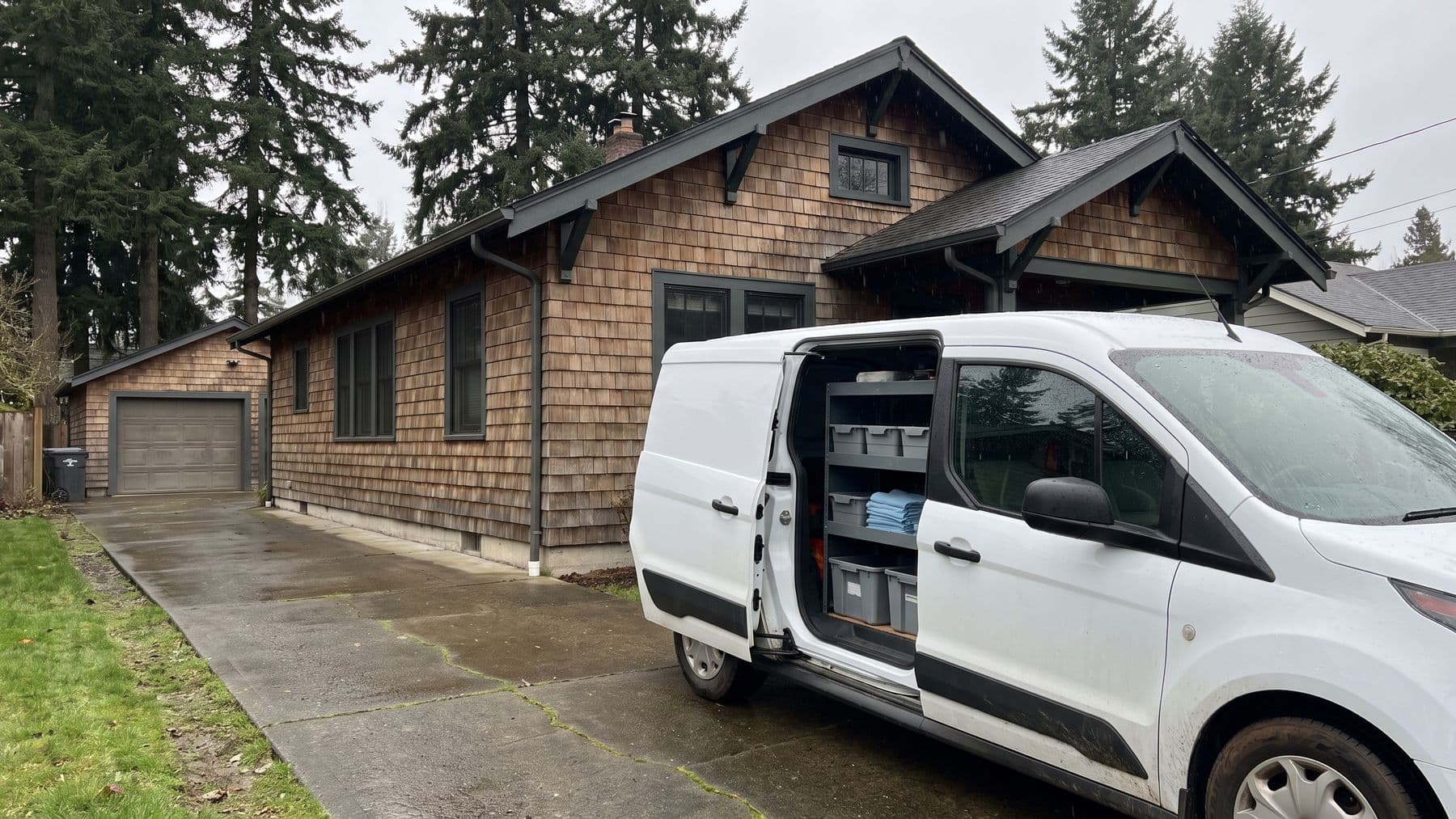
Washington does not appear to license automotive repair as an occupation. The Department of Licensing publishes the list of professions and industries it regulates, and it runs from appraisers through cosmetology to whitewater river outfitters, with vehicle dealers, vehicle manufacturers and vehicle transport on it. Repair is not.
That is an absence from a catalogue rather than an agency saying no license exists, which makes it weaker evidence than the sentence Texas publishes. The search list below shows what we opened.
What Washington does require is easier to state than the licensing question. There is a state business license from the Department of Revenue with named thresholds. The Department treats a repair for a consumer as a retail sale, so the tax is collected on the total charge and the work is inside it rather than beside it. And chapter 46.71 RCW, the automotive repair chapter, applies to any person who for compensation is in the business of repairing or diagnosing vehicles, with no premises in the definition.
One provision of that chapter is worth a mobile operator reading twice, because its exception is built around a place. The written estimate requirement is waived when a vehicle arrives at the facility regular place of business without face to face contact, which is the after hours drop box case. A driveway job is the opposite of that.
Keep the estimate, the invoice and the photos for every job in one place.
Starter $99/mo · Growth $149/mo · 14 days free on both plans. Cancel anytime.
The Department of Licensing list does not include repair
The quickest way to check whether a state licenses a trade is to read what its licensing agency says it licenses. Washington publishes that list on one page as a filter for its professional license lookup, and it is long: appraisal management, architects, auctioneers, bail bonds, collection agencies, cosmetology, home inspectors, notaries, private investigators, security guards, tattoo artists, timeshares, and more.
Three of the entries are about vehicles, and all three are about moving vehicles rather than fixing them: vehicle and vessel dealer, vehicle manufacturers, vehicle transport and disposal. There is no mechanic, no automotive repair and no repair facility on the list.
What that establishes is where Washington keeps its occupational licenses and that repair is not filed there. It is not a statement that no requirement exists anywhere in the Revised Code of Washington, and the chapter quoted further down this page is proof that regulation of repair does exist in the state without being a license.
We looked and did not find one. Here is where we looked.
What we searched for: a Washington state license, certification or registration to perform automotive repair for compensation. Searched on August 29, 2026.
The repair chapter defines a facility as a person
Chapter 46.71 RCW is called Automotive Repair and it applies without any licensing step. Its definition of a repair facility is a person, firm, association or corporation that repairs or diagnoses vehicles for compensation. Nothing in the sentence requires a building, a bay or a sign.
The definition of automotive repair itself is broader still and is worth reading if the plan involves fleets. It covers diagnosis, installation, exchange and repair of mechanical or electrical parts, and routine maintenance, and then removes commercial fleet transactions involving two or more vehicles and ongoing service contracts for vehicles used primarily for business purposes.
That carve out is the same shape as the one in the Illinois Automotive Repair Act, and it means a mobile operator doing consumer work and fleet work is inside the chapter for half the book and outside it for the other half.
“means any person, firm, association, or corporation who for compensation engages in the business of automotive repair or diagnosis”
Washington State Legislature, RCW 46.71.011(3), definitions. app.leg.wa.gov/RCW/default.aspx. Read August 29, 2026.
“However, commercial fleet repair or maintenance transactions involving two or more vehicles or ongoing service or maintenance contracts involving vehicles used primarily for business purposes are not included”
Washington State Legislature, RCW 46.71.011(2)(a), definition of automotive repair. app.leg.wa.gov/RCW/default.aspx. Read August 29, 2026.
The one exception to the estimate rule assumes a place you drop a car at
RCW 46.71.025 requires a written price estimate before parts or labor, or the offer of a set of alternatives printed in the statute itself, one of which is the customer waiving the estimate. Then it sets a ceiling: the facility cannot charge more than one hundred and ten percent of the written estimate without oral or written authorization to exceed it.
Subsection three is the interesting one for anybody without a shop. A written estimate is not required where the vehicle was brought to the facility regular place of business without face to face contact, and the statute then defines face to face contact as actual in person discussion between the customer and the person authorized to take vehicles in.
Read that against a mobile job. The customer is usually standing there, and there is no regular place of business the vehicle was brought to. The exception is written for the shop with a key drop, which is a fair signal about which end of the trade the chapter had in mind and about which end of it the exception is not available to.
“The repair facility may not charge the customer more than one hundred ten percent, exclusive of retail sales tax, of the total shown on the written price estimate.”
Washington State Legislature, RCW 46.71.025(2), authorization to exceed. app.leg.wa.gov/RCW/default.aspx. Read August 29, 2026.
“A written estimate shall not be required when the customer's motor vehicle or component has been brought to an automotive repair facility's regular place of business without face-to-face contact between the customer and the repair facility.”
Washington State Legislature, RCW 46.71.025(3), exception. app.leg.wa.gov/RCW/default.aspx. Read August 29, 2026.
What goes on the estimate, and what goes on the invoice
RCW 46.71.015 sets a threshold and a content list. Estimates over one hundred dollars are in writing, and the statute names what they contain: the date, both sets of contact details, the year, make and model, the plate or the last eight digits of the vehicle identification number, the odometer reading, and a description of the problem the customer reported.
The invoice list is separate and applies whether or not an estimate was required. Parts by name and number, whether they are rebuilt or used, the price per part, the total for parts, the total for labor and the total charge.
And then a sentence that saves a lot of arguments: parts and labor do not have to be broken out where the price is an advertised special by the job, a predisclosed written repair menu item or a routine service package. Flat rate pricing is not a workaround somebody invented, it is in the statute.
“all estimates that exceed one hundred dollars shall be in writing and include the following information”
Washington State Legislature, RCW 46.71.015(1), estimates. app.leg.wa.gov/RCW/default.aspx. Read August 29, 2026.
“Parts and labor do not need to be separately disclosed if pricing is expressed as an advertised special by the job, a predisclosed written repair menu item, or a routine service package.”
Washington State Legislature, RCW 46.71.015(2), invoices. app.leg.wa.gov/RCW/default.aspx. Read August 29, 2026.
Washington does have a state business license, with stated triggers
Most states in this cluster have no general state business license. Washington does, and the Department of Revenue lists the conditions that bring you inside it rather than leaving it to be guessed. Selling something or providing a service that requires collecting sales tax is one of them. Trading under a name other than your own full legal name is another. Planning to hire within ninety days is a third.
The one people quote is the income threshold, and it is stated as a figure: gross income of twelve thousand dollars a year or more. For anybody doing repair for consumers in Washington, several of these triggers fire at once, so the threshold rarely ends up being the operative one.
The application returns a Unified Business Identifier, and the Department notes that city and state endorsements attached to the application can add weeks to the processing time. That is a scheduling fact worth knowing before promising a start date.
“Your gross income is $12,000 per year or more.”
Washington Department of Revenue, Apply for a business license, registration requirements. dor.wa.gov/open-business/apply-business-license. Read August 29, 2026.
A repair is a retail sale, and the tax lands on the whole charge
The Department of Revenue industry guidance is direct. A repair performed for a consumer is a retail sale, taxed under the retailing classification of business and occupation tax on the total charge, with retail sales tax collected on the total charge as well. There is no untaxed labor line in Washington.
The same guidance splits the purchasing side the way most states do. Parts that go to the customer can be bought on a reseller permit, and consumable supplies that are used up rather than transferred are taxed to the business. Diagnostic equipment and tools are taxed at the time of purchase, and where sales tax was not paid then, use tax is due when the equipment is first put to use in Washington.
That last clause catches people who bought a scan tool out of state. The tax does not disappear because the purchase happened elsewhere, it moves to the return.
“Repairs on vehicles for consumers are retail sales and are subject to tax under the Retailing classification of B&O tax on the total charge made for the repair. Retail sales tax must also be collected on the total charge.”
Washington Department of Revenue, Auto Dealers industry guide, Repairs. dor.wa.gov/education/industry-guides/auto-dealers/repairs. Read August 29, 2026.
“Diagnostic equipment, other equipment, and tools used by employees of the dealership to make repairs are subject to the retail sales tax at the time of purchase.”
Washington Department of Revenue, Auto Dealers industry guide, tools and equipment. dor.wa.gov/education/industry-guides/auto-dealers/repairs. Read August 29, 2026.
What this page does not tell you
- Local business license endorsements, which are added through the same state application and vary by city.
- Workers compensation and industrial insurance through the Department of Labor and Industries, which applies once there are employees.
- Emission and vehicle inspection programmes, which are administered separately from general repair.
- The rest of chapter 46.71 RCW, including the disposition of replaced parts, required signs and lien consequences, which we have not quoted here.
Questions people ask
Does Washington license auto mechanics?
We did not find a license for it. The Department of Licensing publishes the professions and industries it regulates and automotive repair is not on the list, though vehicle dealers, vehicle manufacturers and vehicle transport are. That is an absence from a catalogue rather than a statement by the agency that no license exists.
Is a Washington state business license required?
The Department of Revenue lists the conditions, including selling a product or service that requires collecting sales tax, trading under a name other than your full legal name, hiring within ninety days, and gross income of $12,000 per year or more.
Is repair labor taxable in Washington?
The Department of Revenue guidance says repairs for consumers are retail sales taxed on the total charge, with retail sales tax collected on the total charge. There is no separate untaxed labor line.
Does the written estimate rule apply to work done at the customer location?
RCW 46.71.025 requires a written price estimate or the printed alternatives before parts or labor, and its exception applies where a vehicle was brought to the facility regular place of business without face to face contact. A job done at the customer address does not look like that exception.
Who checked this, and what it is not
This page has not been reviewed by a licensed professional. It was written by reading the agency pages quoted above and nothing else. Every quote links to the page it came from and carries the date we read it, so you can check each one yourself, and the agency is the only thing on this page that is authoritative.
This is not legal, tax or accounting advice, and it does not tell you what you have to do. It describes what the agencies publish, on the date we read it. Rules change, and a rule can apply differently to two businesses that look alike. Check with the agency, or with a lawyer or accountant licensed in your state, before you act on anything here.
Sources on this page were last re-read on August 29, 2026. Found something out of date? Tell us and we will fix it or take the claim down.
Where a CRM fits into any of this
Starter $99/mo · Growth $149/mo · 14 days free on both plans. Cancel anytime.