For one bay shops
Auto repair software for a one bay shop
One door, one lift, one person writing the work. That is a different business from a van and a different business from a shop with a counter, and this page is about what changes in the software when the car comes to you.
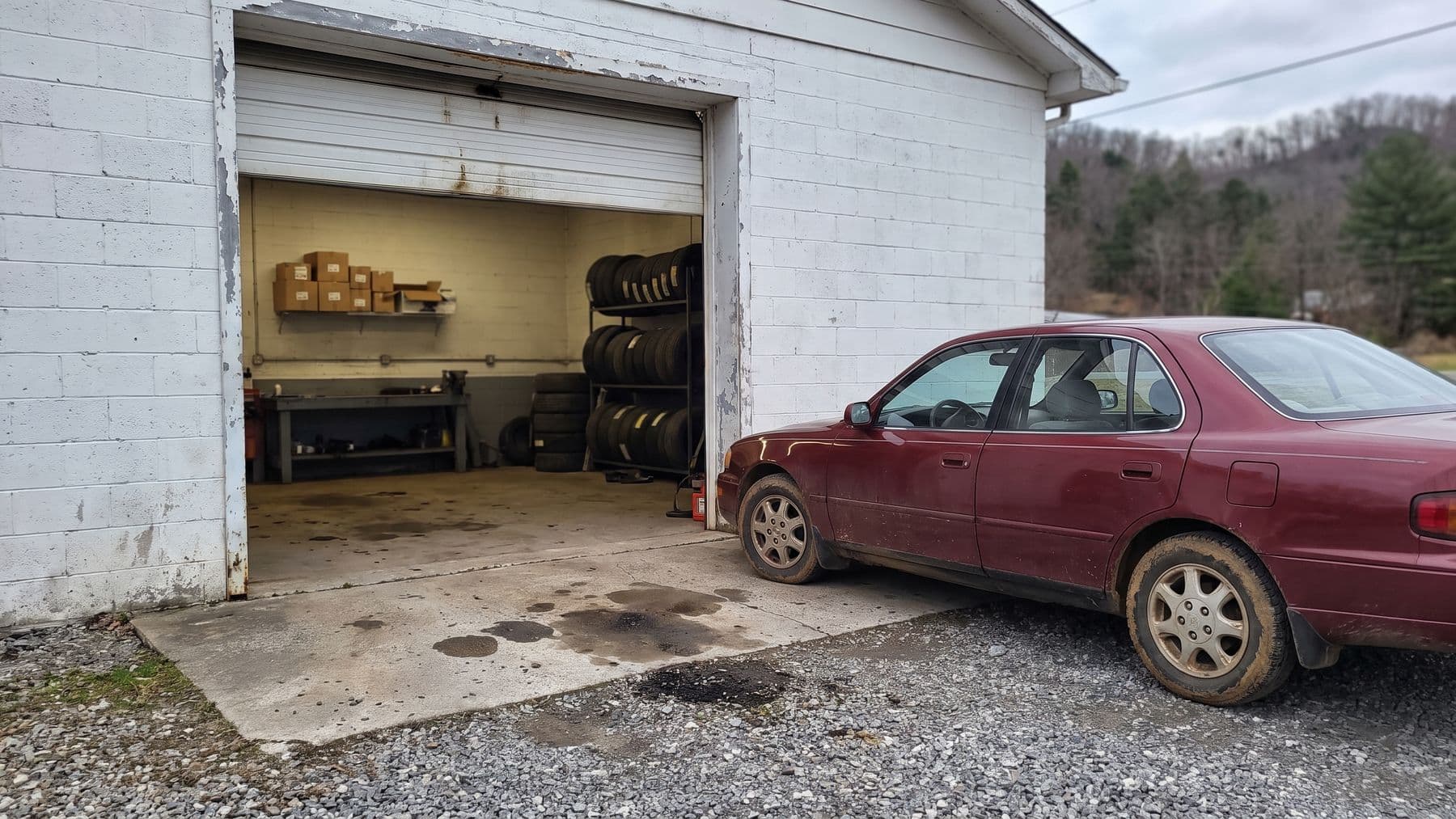
A one bay shop is easy to describe and awkward to shop for. You rent a unit, the lift is yours, your name is on the door, and when the phone rings there is nobody else to pick it up. Software written for shops assumes the counter and the crew you do not have. Software written for mobile work assumes a van you have stopped living out of.
Fixty sits closer to the second of those, and it is worth saying so before anything else. It was built for one mechanic doing the whole job, and every part of it assumes the same person writes the estimate, does the work and gets paid for it. A fixed address does not break that assumption. Somebody else writing work does.
So the useful thing this page can do is not recite a feature list. It is to say which parts of a bay day the product genuinely holds, which parts it leaves entirely to you, and what has to change about your shop before the answer turns into no.
A day when the car comes to you
The van version of this day sits on the mobile mechanics page and it is genuinely a different shape. This one begins with a car in your doorway and ends with keys going back across a counter you do not have.
Before the car is yours
You offer two or three times that suit the bay. The customer picks one from a link, and if none of them work they say so in the same thread instead of playing phone tag with a man who is under a car.
Drop off
The job goes on the board with the vehicle attached. If the car has been in before, the record already carries what you did last time and what you warned them was coming, which is the argument that sells the next repair without you having to remember it.
Before you touch a bolt
The estimate goes out as a link and gets approved line by line from wherever the owner went after handing you the keys. What they agreed to is written down and dated instead of recalled from half a minute in a doorway.
While it is in the air
The inspection is photographed on the spot. Your customer is at work and cannot look underneath the car, so the photograph has to do the whole job that standing beside the lift used to do.
The part you do not have
The line is marked as needed and the job moves to waiting parts. Everything outstanding across the next couple of days is piled up by supplier on one screen, so the counter run is one trip rather than one trip per car.
Keys back
The work order becomes the invoice with every line carried across. They pay by link before they arrive, or you record the cash or the check against the same order when it lands in your hand.
What earns its keep when the shop is one bay
Every row below is an axis Fixty is measured on across this site, so the wins here are printed from the same record as the losses underneath them.
Job pipeline board
The board is the only place your queue exists. A car on the lift, a car in the lot and a car nobody can start until Thursday are three different problems, and the columns hold them apart without a whiteboard nobody updates.
Customer approves the estimate by text, line by line
The customer opens a link, picks the lines they want, and signs.
A customer who drove off after dropping the keys cannot nod at you. Approving one line and declining another is how the work gets authorized while they are at their own desk, and it is the record you point at if they forget.
Photo vehicle inspections
Included on every plan, not an upgrade.
The photo does the work the counter used to do. Nobody is standing next to the lift to be shown the torn boot, so it has to travel to them instead.
Card payments
Stripe, paid from the same link as the estimate.
Most of the money can land before the customer walks back in, and whatever does not can be recorded against the same order when it arrives as cash or a check.
Public booking page
The unit has no receptionist in it. A request form catches the work while both your hands are busy, which is not the same thing as a calendar people book themselves into, and the sections below are honest about that difference.
Runs entirely from a phone
Estimate, inspection, schedule and payment all work from a phone, in the browser or the free Fixty app.
There is no office in a one bay shop, or if there is one it is a desk you sit at on a Sunday. The work order gets written on the phone in your pocket, standing next to the car it belongs to.
What a building does not fix
The first three are rows Fixty loses on every comparison table on this site, printed from that same record. For a shop with an address they are the three that decide it. The rest are honest gaps with no comparison row to print.
Parts inventory management: no
Fixty tracks parts on a job, not stock on a shelf.
Multi technician teams: no
One mechanic, one workspace. Built solo first on purpose.
Accounting sync: no
No QuickBooks or Xero integration today.
- The schedule has no bay in it. An appointment is a date, a start time, a length and an address, and nothing in the product will stop you putting two cars into the same hour, because nothing in it knows you have one lift.
- The booking page takes a request rather than a slot. The customer says when they would like to come in and you confirm it. They never see your open hours and they cannot book themselves in.
- There is no import screen. Adding a customer, a vehicle or a job means the same form every time, and the only way round that for a list you already hold is to send it to support and have somebody load it with you.
None of that is fatal to a shop running the way most one bay shops run today. All of it gets worse the week the shop grows, which is what the last section on this page is for.
The bay is what you are really scheduling, and the software cannot see it
A mobile mechanic loses the day to driving. You lose it to a lift that holds one car, a door that fits one car through it, and a lot that holds however many the landlord tolerates. That single constraint is most of what makes a one bay shop hard to run, and no part of Fixty models it.
What the product holds about time is short. An appointment is a date, a start time, a length in minutes and an address, plus a status and the reminders that ride on it. There is no bay, no resource and no capacity anywhere in that record, which has consequences you should hear stated plainly:
- Nothing warns you that the hour you just booked already has a car in it.
- Nothing knows that the car which arrived on Monday is still on the lift on Wednesday waiting for a part.
- Nothing works out how many jobs a day can hold, because that number depends on the lift, and the lift is not in the software.
The board carries the truth instead. Waiting parts is the column that matters most to a bay, because a stalled car is still occupying the space the next booking quietly assumed would be free. Keeping that column honest is the closest thing to capacity planning you get here.
That is a real limitation, and for one person it is also a survivable one: you are the only human making promises, so the calendar and your own judgement never contradict each other. It stops being survivable the moment a second person can book work into your day.
A part in the bay and a part on the shelf are two different problems
This is the row that decides the question for most shops with an address, and the comparison line on its own, no parts inventory, is too blunt to be any use to you. So here is the precise version.
A part that belongs to a car you already have is tracked. On the work order it carries a part number, a brand and a supplier, and a status that moves from needed to ordered to received. Everything still outstanding for the next couple of days collects on one screen grouped by supplier, which is the difference between one stop at a counter and a separate stop for every car.
A part that belongs to no car yet is not tracked at all:
- No stock level, so nothing can tell you how many filters are sitting on the rack.
- No reorder point and no purchase order, so nothing tells you to buy more of anything.
- No vendor catalog and no live availability, so the part number and the price are whatever you typed in.
- No value on the shelf, so the money tied up in stock appears in none of your numbers.
The line is easy to find in your own unit. If every part you buy is bought for a car that is already yours, Fixty tracks parts the way you actually use them. The week you start buying pads and filters by the case so a common job never has to wait, you have inventory, and you now own a problem this product does not solve.
The customer arrives, so the risky moment moves to the front of the job
For a van the first hard moment is turning up: right address, right car, right time. Yours is the drop off, and it contains three things a mobile job never has. The car has to physically be here. The keys have to change hands. And you have to be allowed to start work on a vehicle whose owner has already left the building.
Fixty holds the last of those properly and about half of the first.
- Times are offered rather than assumed. You propose the slots that suit the bay, the customer chooses one from a link, and a request to move it comes back in the same thread instead of as a voicemail you find at lunch.
- The confirmation text goes out when the time is saved unless you tell it not to, and a reminder goes out by itself on any appointment you switched reminders on for. An appointment nobody turned up for is marked as a no show on the appointment itself, so the empty slot is recorded somewhere other than your memory.
- Approval is line by line and dated, which is as close as you get to a signed authorization in your hand when the owner is not standing in front of you.
What the product does not hold is the car itself. Nothing in it knows whether the vehicle is in your bay, in your lot or still on the customer driveway. The check in flow that does exist was written for the other kind of mechanic: it starts a clock, takes the before photos, and offers a text saying you have arrived. In a bay the clock and the photos still earn their keep, and the arrival message is the one step with nowhere to go. Nothing sends it unless you tap the button.
The key hook, the tag and the note about where you left it parked stay entirely yours to run. Any page telling you otherwise would be selling you something.
Three changes that end this, and what to do when one of them happens
A page like this is worth reading only if it tells you when to stop. So here are the three changes in a one bay shop that turn Fixty from a fit into a problem. Each of them happens on a particular day, and you will know the day it happens.
- Somebody else starts writing work. A helper who pulls wheels and hands you tools changes nothing here. A second person who opens jobs, sends estimates or takes payments changes everything, because there is one workspace and one login, jobs cannot be assigned to anybody, and the history will not tell you which of you moved a status. Two people sharing one account is not a team feature and nobody should sell it to you as one.
- You start buying parts before there is a car for them. That is a shelf. A shelf needs counting, reordering and valuing, and none of those three exist in this product.
- The books outgrow an evening of retyping. There is no QuickBooks or Xero connection, so every hour your numbers spend being copied across is an hour you are paying for by hand.
When one of those lands, the honest move is to go and read what the shop native products say about themselves. The auto repair shops page on this site does exactly that: three of them, each quoted describing its own buyer, with the page it came from and the date it was read. We sell competing software, so weigh their words rather than our summary of them.
And if none of the three has happened yet, none of them is a reason to buy for a shop you do not have. Moving software later costs you a weekend. Running the wrong shape of software for a year costs you every day of that year.
Questions people ask before they sign up
How is this different from what your auto repair shops page says?
That page is written for a garage with a counter and technicians splitting a repair between them, and it spends most of its length telling that reader to buy something else. This page is for the operator it points at in its final section: one person, one bay, no handover. Same product, opposite answer, because those are not the same business.
I have a helper. Does that make me a two technician shop?
It depends entirely on what the helper does. Somebody who pulls wheels and passes you tools changes nothing, because you are still the only person writing work. Somebody who opens jobs, quotes them or takes money is a second person on the paperwork, and this product has no way to tell the two of you apart.
Can it track the parts on my shelf?
No. A part in Fixty belongs to a job and carries a part number, a brand, a supplier and whether it is needed, ordered or received. There is no stock level, no reorder point and no purchase order, so anything you buy before there is a car for it is invisible to the software.
Will it stop me double booking the bay?
No. There is no bay, no capacity and no resource in the schedule, so two cars can be booked into the same hour and nothing will object. Knowing what actually fits into a day stays your job.
Does it handle drop off and key handover?
Not as a feature. The check in flow was built for a mechanic arriving at a car: it clocks you in, takes before photos and offers a text telling the customer you are there. In a bay the clock and the photos still work and the arrival text has nowhere to go, and it never sends unless you tap it. Keys stay a hook and a labelled tag.
I am moving off shop software. Can I bring my customer list?
Not from a screen, because the app has no import page. What happens instead is that you send the list over and somebody at support loads it into your account with you. Ask about it while you are still deciding rather than on the first evening, because a person is involved and no turnaround has been set.
What does it cost?
Starter is $99 per month, Growth is $149 per month, and each one starts with the same 14 day free trial: a card is collected at signup and charged on day 14. What Growth buys on top is the marketing half: your own text number, two way texting, service reminders, campaigns and review requests. Cancel whenever you like and the access runs to the end of the cycle you paid for.
Put one drop off through it
Offer the times, take the approval by link, photograph the inspection while the car is up, and take the money before the keys go back. One car end to end tells you more than a month of reading feature lists.
Try Fixty free for 14 days